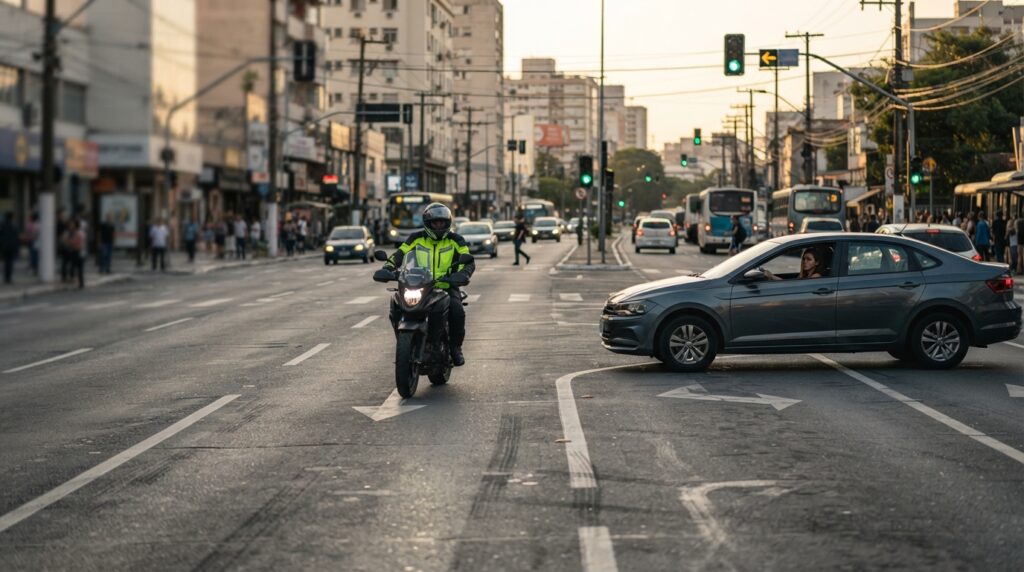

Motorcycle road hazard safety in 2026 deserves attention because even experienced riders encounter unexpected pavement conditions. Loose gravel, potholes, wet leaves, oil, and scattered debris can reduce traction or force sudden decisions.
Unlike cars, motorcycles depend on balance and controlled tire contact with the road. An abrupt steering or braking input can become especially risky when the available grip changes.
Autumn creates additional concerns. Rain can move dirt onto pavement, fallen leaves can hide hazards, and shorter days can reduce visibility.
However, preparation can help riders respond more effectively. This guide explains how to recognize common hazards, adjust speed, protect traction, and practice safer riding habits.
How Common Road Hazards Affect Motorcycle Traction
Every motorcycle relies on friction between its tires and the road. That grip supports braking, acceleration, steering, and cornering.
When pavement conditions change, riders may have less traction available for those actions.
The safest response depends on the hazard, motorcycle, speed, tire condition, and available escape space. No single technique works in every situation.
Recognize loose gravel, sand, and damaged pavement
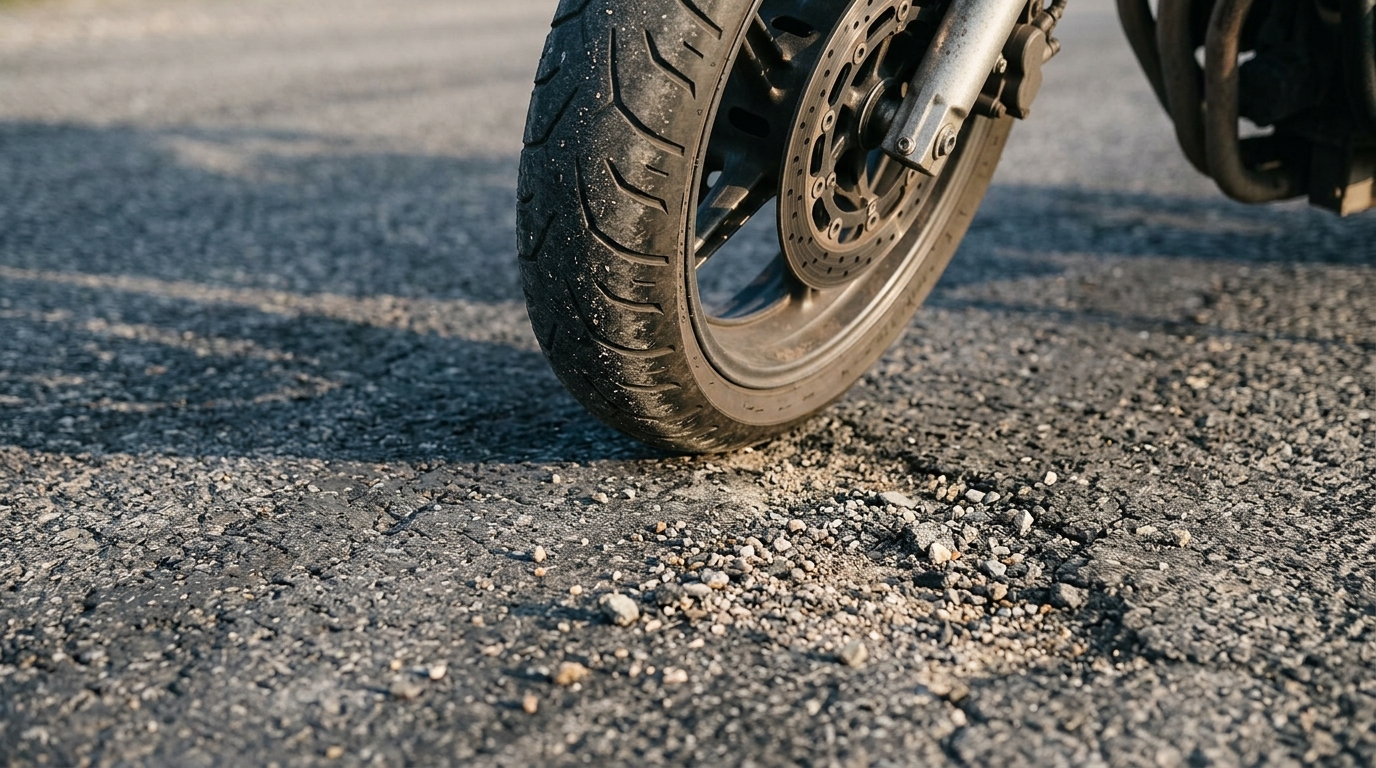
Loose gravel can appear near construction zones, rural intersections, road shoulders, and driveways. Sand and dirt may collect where water crosses the pavement.
These materials create a less predictable surface than clean, dry asphalt.
A motorcycle can lose traction when a rider brakes sharply, accelerates aggressively, or makes a sudden turn on loose material.
Look well ahead and scan the road surface rather than concentrating only on traffic.
What to do when you approach gravel on the road
If you identify gravel early, reduce speed smoothly while the motorcycle remains on a surface with dependable grip.
Choose a safe path around the loose material when traffic and road conditions allow.
If you must cross gravel, avoid abrupt steering, braking, and throttle changes. Keep your movements smooth and maintain a controlled line.
Do not fixate on the gravel. Look toward a safe path while monitoring nearby vehicles.
Riding technique varies with motorcycle type, available traction, and the size of the hazard. Seek qualified instruction before attempting unfamiliar maneuvers.
Why potholes and pavement edges are dangerous
Potholes can damage tires or wheels and disrupt motorcycle balance. Large holes may also produce sudden suspension movement.
Uneven pavement, raised repair edges, and construction grooves create related hazards.
When you spot damaged pavement, assess whether you have enough space to avoid it safely.
Do not swerve suddenly into another lane or toward oncoming traffic.
If you cannot avoid a minor irregularity, keep the motorcycle as stable and upright as practical while using the technique appropriate to the conditions.
Significant obstacles may require emergency braking or other trained avoidance skills. Practice these responses with an instructor in a controlled environment.
Understand wet leaves, oil, and painted road markings
Wet pavement changes the amount of traction available. Some surfaces become particularly slippery when rain combines with oil, dirt, or organic material.
Fallen leaves can create two separate problems. Wet leaves may reduce grip, while piles of leaves can hide potholes, gravel, and uneven pavement.
Painted road markings and metal utility covers may also provide less traction than surrounding asphalt when wet.
How to manage slippery surfaces in the rain
Reduce your speed before reaching a slippery area whenever possible. Increase your following distance to allow more time for decisions.
Use progressive braking and smooth throttle inputs. Avoid abrupt changes in direction, especially while the motorcycle is leaned over.
When crossing a potentially slippery surface, keep the motorcycle more upright when the road layout and conditions allow.
Remember that the safest path may change as traffic moves. Continue scanning ahead and maintain an appropriate escape option.
For additional visibility guidance, read our night motorcycle riding safety guide.
Why road debris requires early decisions
Branches, tire fragments, discarded objects, and cargo debris can appear unexpectedly on highways.
Small objects may move under traffic or become difficult to distinguish against dark pavement.
Scanning farther ahead gives riders more time to recognize these hazards.
Maintain a safe following distance, particularly behind trucks and larger vehicles that block your view of the road.
Never follow another vehicle so closely that you cannot respond when an obstacle suddenly appears.
When an unavoidable hazard requires emergency action, use braking and steering techniques that match your training and motorcycle equipment.
How Riders Can Prepare for Road Hazards in 2026
Road hazard safety begins before the ride. Tires, brakes, suspension, lighting, and protective gear all influence a rider’s ability to respond.
Mechanical preparation cannot eliminate dangerous pavement conditions. However, it helps ensure the motorcycle operates as intended when the rider needs control.
NHTSA recommends checking tire pressure, tread, brakes, lights, and fluid levels before riding.
Build better observation and emergency riding habits
Experienced riders constantly update their understanding of the road ahead. They observe traffic, look for changing pavement conditions, and plan alternative paths.
This habit becomes especially important near intersections, curves, construction zones, and shaded areas.
For example, a curve beneath dense trees may remain damp after nearby pavement dries.
Similarly, vehicles entering from unpaved driveways may carry dirt onto the road.
Scan the road and leave room to respond
Look far enough ahead to recognize developing hazards while continuing to monitor the space immediately in front of your motorcycle.
Watch for changes in pavement color, unusual reflections, loose material, and debris near intersections.
Leave enough room behind other vehicles to respond to unexpected stops or objects.
If a vehicle blocks your view, adjust your following distance instead of relying on the other driver to avoid hazards for you.
Our motorcycle visibility at intersections guide explains how riders can combine positioning, observation, and escape planning.
Practice braking and obstacle avoidance safely
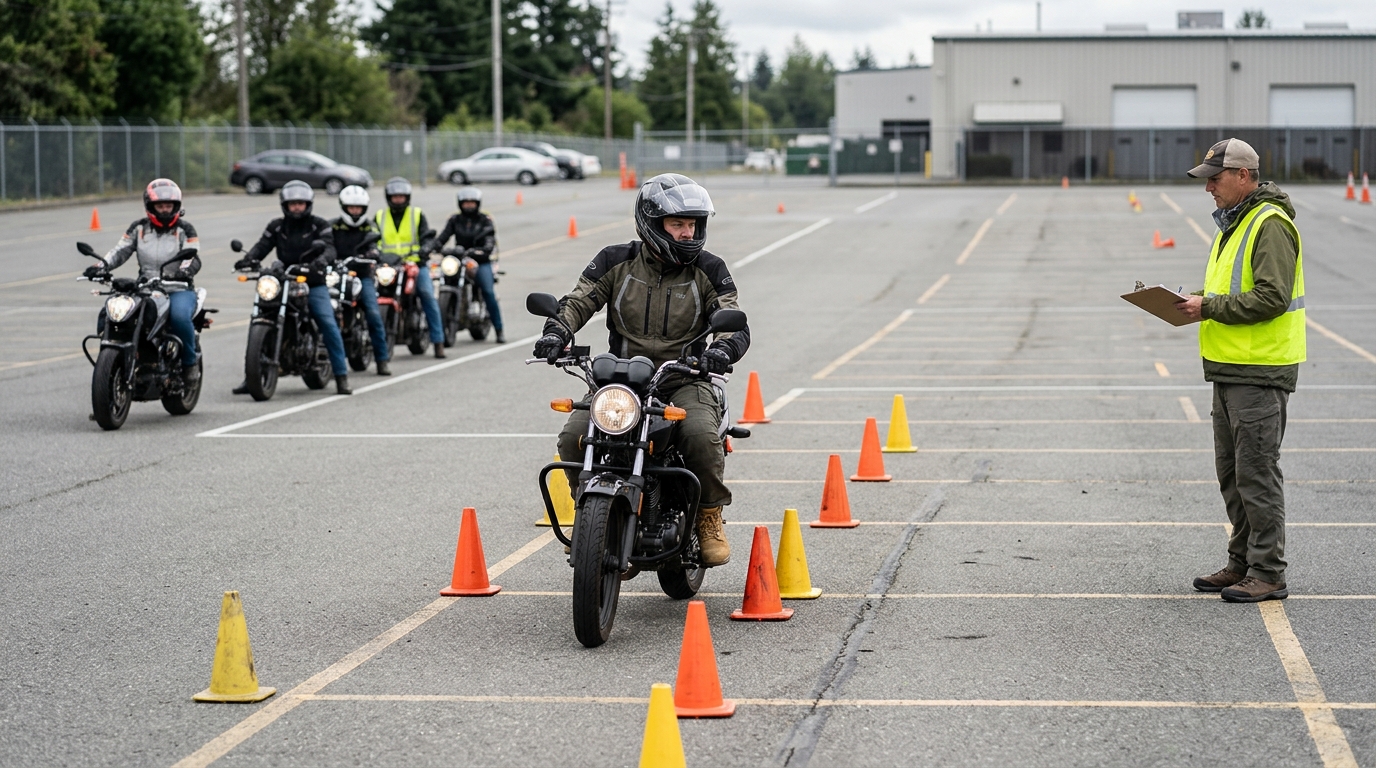
Emergency skills improve through structured instruction and controlled practice.
A certified rider-training course can teach progressive braking, controlled steering, and hazard recognition.
Practice on a suitable closed course rather than attempting emergency maneuvers on public streets.
Start with the instructor’s recommended exercises and gradually develop confidence.
Do not attempt high-speed swerves or aggressive braking drills without suitable supervision.
Different motorcycles respond differently because of weight, tires, geometry, and electronic equipment.
Understand what motorcycle ABS can and cannot do
Anti-lock braking systems help prevent wheel lock during hard braking. This can improve stability in many emergency situations.
However, ABS does not create unlimited traction or guarantee a shorter stop on every possible surface.
The Insurance Institute for Highway Safety reports that motorcycle models equipped with optional ABS had a 22 percent lower fatal crash involvement rate than comparable versions without ABS in a major study.
That finding supports the technology’s safety value without suggesting it prevents every crash.
Read our motorcycle ABS safety guide for a more detailed explanation.
Inspect tires and brakes before every ride
Check tire pressure against the motorcycle and tire manufacturers’ recommendations.
Inspect tread depth and look for cracks, punctures, unusual wear, or embedded objects.
Do not ignore a tire that repeatedly loses pressure.
Check brake operation and watch for fluid leaks or unusual mechanical behavior.
If the motorcycle develops a steering, suspension, or braking problem, arrange qualified service before continuing normal riding.
Worn tires or poorly maintained brakes can reduce the safety margin when road conditions deteriorate.
Choose protective equipment for changing conditions
Wear a properly fitted, DOT-compliant helmet whenever riding on public roads in the United States.
Use abrasion-resistant riding clothing, gloves, sturdy footwear, and suitable eye protection.
Waterproof layers can help you remain comfortable during rain, while reflective details may improve visibility in darker conditions.
However, bright clothing cannot guarantee that other drivers will notice you.
Continue using appropriate lane positioning, following distance, and defensive riding habits.
For helmet selection, consult our 2026 DOT-compliant motorcycle helmet guide.
Adjust your riding plans for autumn weather
Before leaving, check the forecast along the entire route rather than only at your destination.
Mountain roads may become cooler and wetter than nearby lowland communities.
Watch for early frost, standing water, strong winds, and reduced visibility.
If severe weather develops, consider postponing the ride or stopping in a safe location.
Always prioritize safe travel over completing a planned route on schedule.
Respond carefully when a hazard appears suddenly
When you encounter an unexpected obstacle, identify the safest available option without fixating on the object.
Depending on the situation, you may need to brake, change direction, or combine actions using a trained technique.
Avoid sudden, unplanned movements that could create another conflict with nearby traffic.
Do not use the shoulder automatically as an escape route. Gravel, drainage features, or debris may make it unsafe.
Riders should develop emergency responses through qualified training rather than trying unfamiliar techniques during an actual emergency.
Know what to do after hitting a pothole or debris
If your motorcycle strikes a significant road hazard, monitor its handling and listen for unusual sounds.
Pull over at a safe location when practical. Inspect tires, wheels, suspension components, and visible fluid leaks.
Do not continue riding if the motorcycle develops unstable steering, damaged tires, or serious mechanical problems.
Arrange professional inspection or transportation when necessary.
Even when the motorcycle appears normal, some impacts can damage components that require closer examination.
Keep improving your hazard awareness
After each ride, review situations that required extra attention.
Did you recognize loose gravel early? Did another vehicle block your view? Could a greater following distance have helped?
Use these observations to improve future decisions without blaming yourself for every unexpected road condition.
Riding with experienced, safety-focused motorcyclists can also provide opportunities to discuss common hazards.
However, avoid copying techniques that conflict with formal training or safe riding principles.
For reliable educational guidance, visit the NHTSA Motorcycle Safety resource.
Motorcycle road hazard safety in 2026 requires preparation, observation, and controlled responses.
Gravel, potholes, wet leaves, and road debris can create challenges, but riders can reduce avoidable risks by managing speed and maintaining their equipment.
Build your riding skills through instruction, leave enough space to react, and treat unfamiliar road surfaces with caution.
The strongest safety strategy combines reliable equipment, thoughtful decisions, and continuous learning.
Safety disclaimer: This article provides general motorcycle safety education. Road conditions, motorcycle designs, and individual skills vary. Seek qualified rider training for emergency braking and obstacle avoidance techniques.