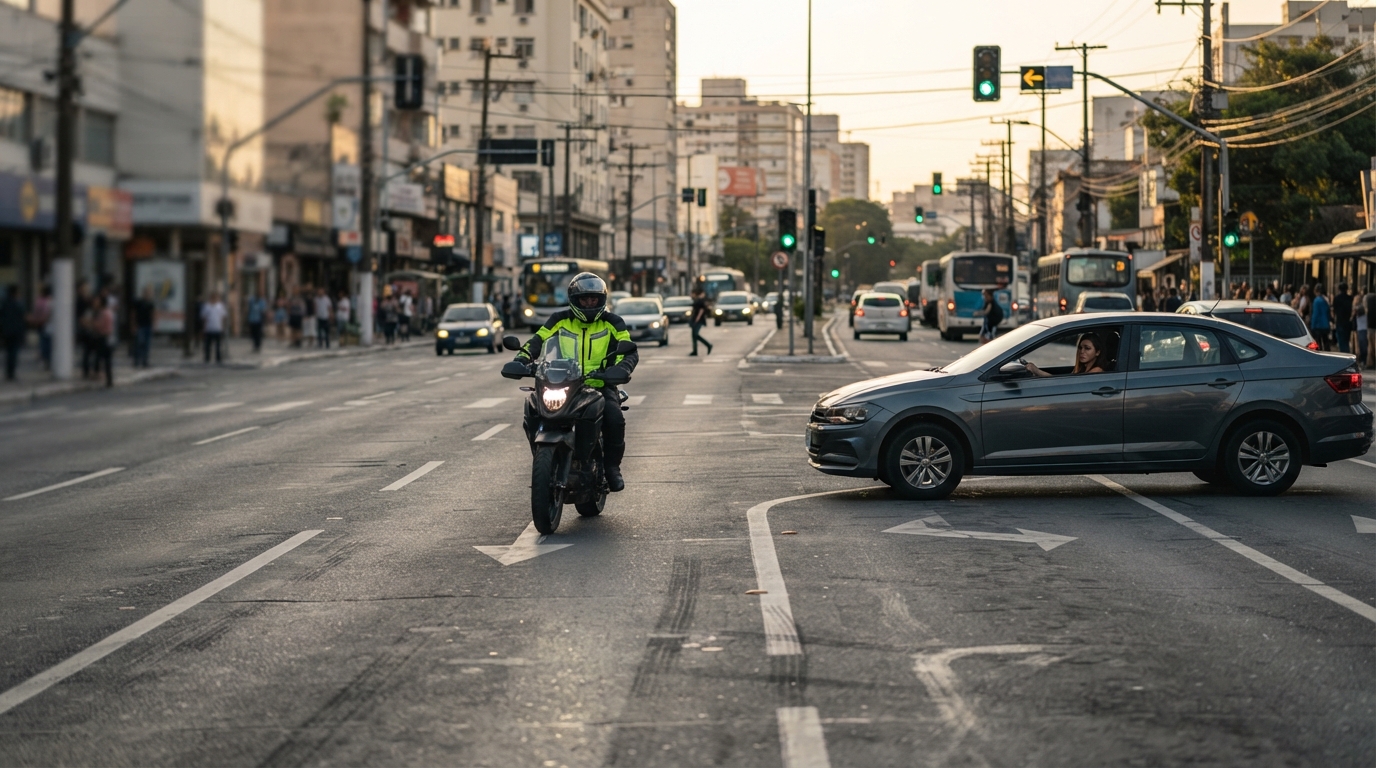
Motorcycle visibility at intersections remains one of the most important safety issues riders face. A driver may look toward an approaching motorcycle and still turn across its path. In other cases, a motorcycle can be partly hidden behind a vehicle pillar, another car, roadside object, or busy background until the situation becomes critical.
Intersections deserve special attention because motorcycles have a narrow profile and can be harder for other road users to detect and judge. A driver also has to estimate the motorcycle’s speed and distance before deciding whether there is enough time to turn.
Modern vehicle technology is beginning to address part of the problem. Automatic emergency braking, forward collision warning, cameras, and radar are increasingly tested against motorcycle targets. However, riders should never assume another driver or an electronic system has detected them.
This guide explains why motorcycles can be overlooked, why left-turn conflicts deserve extra attention, and how riders can increase their safety margin. You can also explore our motorcycle safety tips and motorcycle training resources for more practical riding guidance.
Why Motorcycle Visibility at Intersections Can Be Difficult
A motorcycle presents a much smaller visual target than a passenger vehicle. That affects more than whether another driver can physically see it. It can also affect how quickly the driver’s brain recognizes the motorcycle as an approaching vehicle and estimates its speed.
NHTSA advises drivers to pay particular attention to motorcyclists because of their smaller size and visibility. It also specifically reminds motorists to look for motorcycles before making left turns.
For riders, the important lesson is simple. Having the right of way does not guarantee that another road user has recognized your presence.
Left-Turn Conflicts Are a Major Motorcycle Crash Pattern
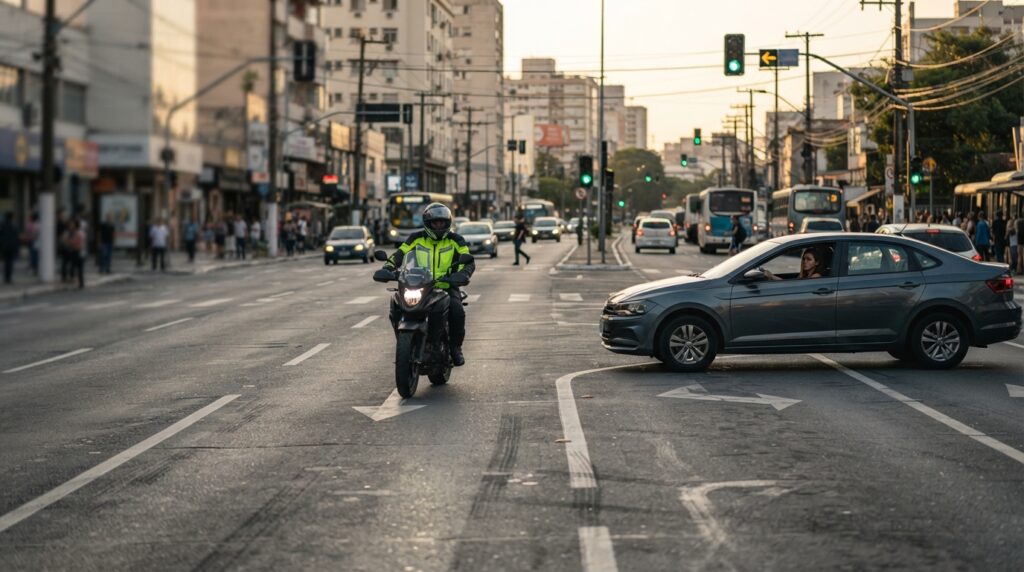
One of the most serious intersection scenarios occurs when a driver turns left across the path of an oncoming motorcycle. IIHS research examining 2017 through 2021 crash data found that crashes in which another vehicle turned left in front of an approaching motorcycle represented 26% of fatal two-vehicle motorcycle crashes.
That makes the approaching left-turn vehicle an important hazard to recognize early.
As you approach an intersection, look beyond the traffic signal. Search for vehicles waiting in turn lanes, cars creeping forward, front wheels beginning to turn, and drivers whose view may be blocked by other vehicles.
Do not assume that eye contact means the driver has correctly judged your speed or intends to wait.
A motorcycle can disappear into a driver’s visual environment
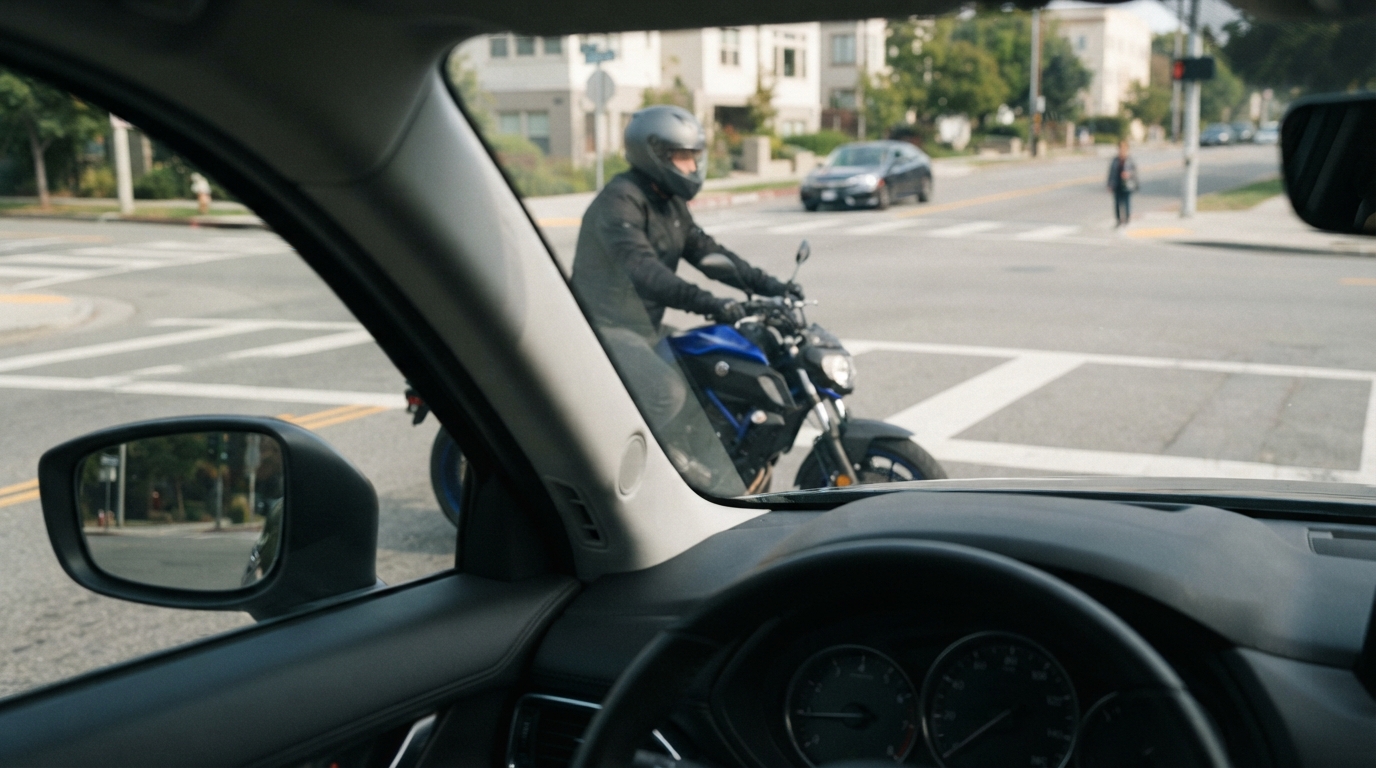
Vehicle design can create temporary blind areas. Windshield pillars, mirrors, other vehicles, landscaping, signs, and roadside structures may briefly block a motorcycle from a driver’s view.
Because the motorcycle is narrow, even a relatively small obstruction can hide much of its profile. A driver who checks once and immediately begins a turn may miss a motorcycle that becomes visible a moment later.
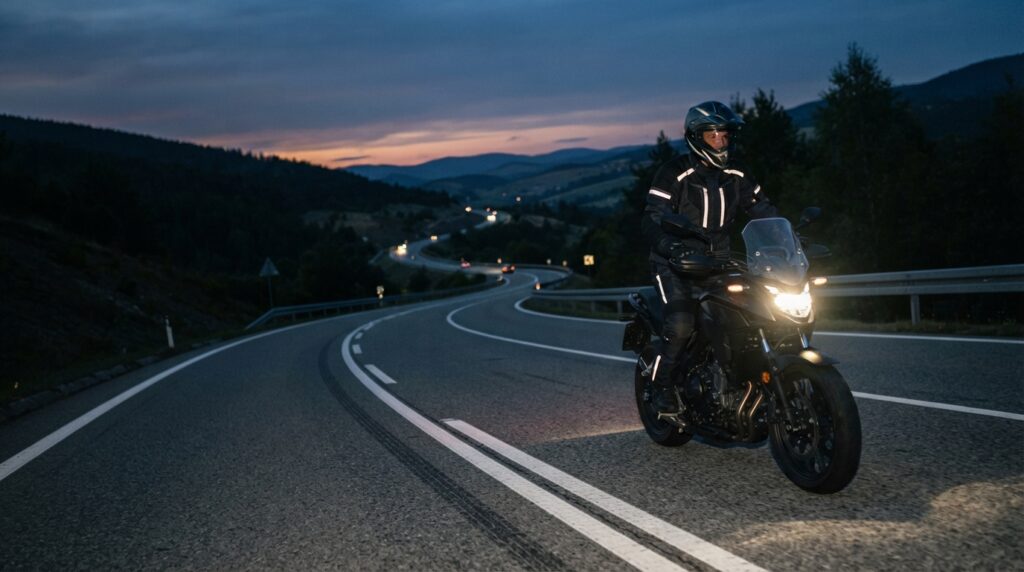
Background clutter can add another challenge. A rider wearing dark clothing in front of trees, buildings, shadows, or traffic may not stand out strongly. Lighting conditions can also affect contrast.
Therefore, treat visibility as something you actively manage rather than something you automatically have.
Do not rely on eye contact or your headlight alone
Riders often try to determine whether a driver has seen them by looking toward the driver’s face. That information can be useful, but it is not a guarantee.
The driver may be looking through you, past you, or toward another hazard. Even when the driver recognizes the motorcycle, they may still misjudge its distance or speed.
A motorcycle headlight can improve conspicuity, especially during the daytime. However, surrounding vehicles increasingly use daytime running lights as well. As a result, a single motorcycle headlight may not always create a unique visual signature.
Use several strategies together. Maintain your lighting, wear visible protective equipment, choose a useful lane position, manage speed, and keep an escape route available.
How Riders Can Increase Their Safety Margin
Motorcycle visibility at intersections is partly about being noticeable, but defensive riding goes further. You also want enough time and space to respond if another driver does not see you.
Begin reducing risk before reaching the intersection. Scan well ahead and identify every vehicle that could potentially cross your path.
If a vehicle is waiting to turn left, consider it a developing hazard until you have safely passed it. Covering the brakes can reduce the time needed to begin braking if the vehicle moves.
However, avoid becoming so focused on one turning vehicle that you miss another hazard. Continue scanning pedestrians, side streets, traffic signals, rear traffic, and vehicles waiting to enter the road.
Build visibility, space, and time into your approach
Lane position can sometimes improve the angle between you and another driver. However, there is no universal lane position that is safest at every intersection.
Choose the position that gives you the best combination of visibility, surface condition, escape space, and separation from other traffic.
Also manage your speed. Entering an intersection faster reduces the time available to react if another vehicle starts moving. A slightly lower approach speed can create more decision time without requiring an unnecessary stop.
Following distance matters too. Avoid hiding directly behind larger vehicles when approaching an intersection because they can block you from another driver’s view. Creating space may improve both your view and your visibility.
Protective equipment remains important because no visibility strategy can prevent every collision. A DOT-compliant helmet, abrasion-resistant clothing, gloves, boots, and appropriate eye protection can reduce injury exposure if avoidance fails. Visit our motorcycle gear guides for more equipment guidance.
How AEB Technology Is Learning to Detect Motorcycles Better
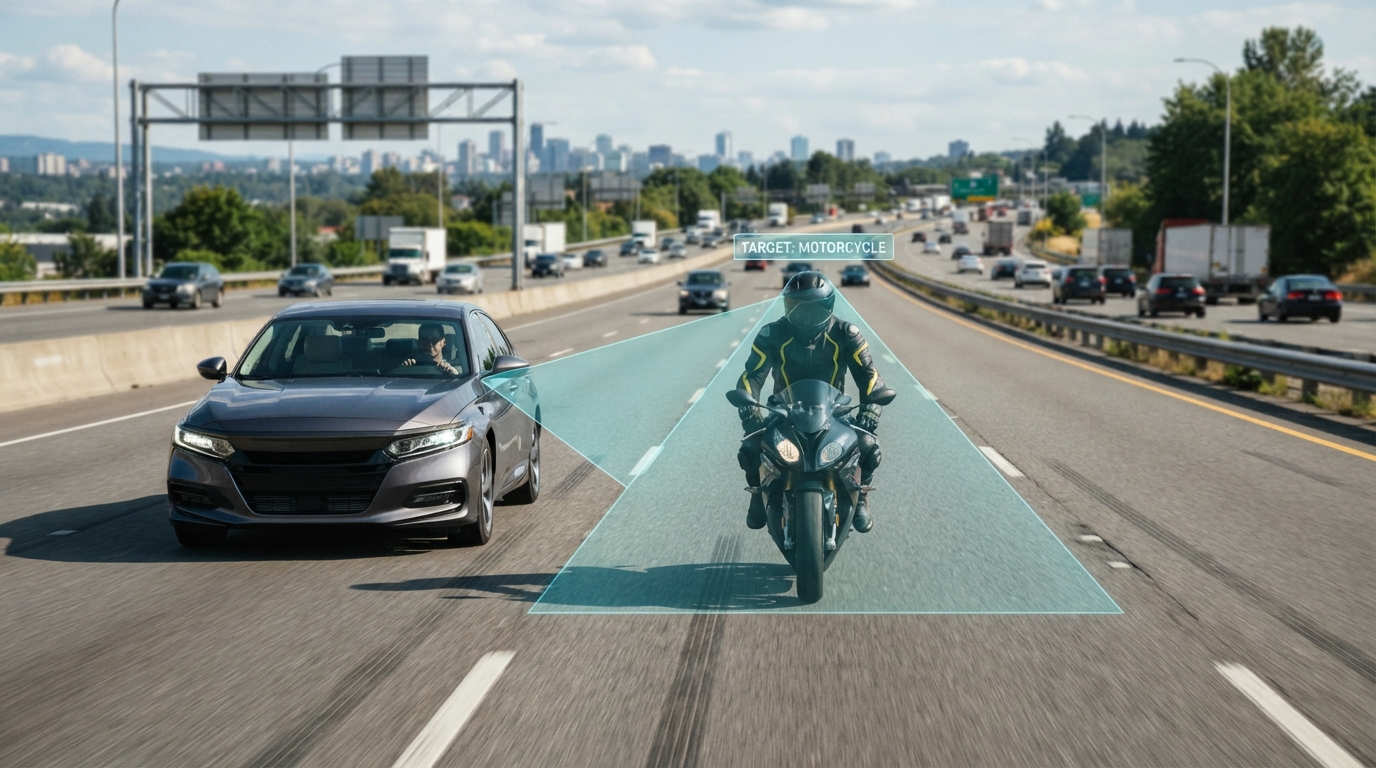
Vehicle safety technology adds another dimension to motorcycle visibility. Many modern passenger vehicles use forward-facing cameras, radar, or both to support forward collision warning and automatic emergency braking.
Forward collision warning can alert a driver when the system detects that a collision is becoming likely. Automatic emergency braking can apply the brakes when the driver does not respond quickly enough.
These technologies have already shown substantial benefits in many rear-end crashes. However, detecting motorcycles creates unique challenges because motorcycles are smaller and narrower than passenger cars.
Current Crash-Prevention Tests Now Include Motorcycle Targets
IIHS has updated its front-crash-prevention evaluation to better represent real-world hazards. The current test evaluates how vehicles respond not only to a passenger car, but also to a stationary motorcycle and a large truck.
The motorcycle target is tested both in the center of the lane and offset toward one side. Tests are conducted at 31, 37, and 43 mph.
This matters because earlier research showed that some forward-collision systems were less consistent when approaching motorcycles than passenger cars. IIHS reported that motorcycles’ smaller and narrower profiles can make them more difficult for camera- and radar-based systems to identify, particularly at higher speeds.
Results are improving, but performance still varies by vehicle. Some current systems can avoid or greatly reduce impact speed with motorcycle targets. Others perform less consistently, particularly in more demanding higher-speed situations.
Technology can help, but riders still need a defensive strategy
Automatic emergency braking should be treated as another layer of protection, not something a motorcyclist can depend on.
You usually do not know what safety system an approaching vehicle has. Even if it has AEB, you do not know whether its camera or radar has identified your motorcycle correctly, whether the system is active, or how it will perform in that exact situation.
Weather, lighting, road geometry, sensor condition, vehicle speed, target position, and software design can all influence system performance.
For a current explanation of how motorcycle targets are incorporated into vehicle crash-avoidance testing, review this IIHS front crash prevention resource.
Riders should therefore continue using traditional defensive techniques. Watch front wheels for movement. Leave escape space. Cover the brakes when a conflict appears possible. Avoid unnecessary time in blind spots. Use appropriate lighting and visible gear. Most importantly, assume a driver may move even when you believe they should wait.
Our motorcycle training section covers braking, hazard recognition, cornering, and other skills that can help riders respond to developing traffic conflicts. You can also follow our motorcycle news and laws section for developments in rider and vehicle safety technology.
Drivers have responsibilities as well. They should actively search for motorcycles before entering or crossing traffic, especially during left turns. A quick glance may not be enough. Checking again can reveal a motorcycle that was previously hidden by a windshield pillar, vehicle, or background object.
Motorcycle visibility at intersections is ultimately a shared-road problem. Better rider positioning can help. Better driver awareness can help. High-visibility equipment may help. Improved vehicle sensors and automatic braking can add another safety layer.
No single measure can solve every conflict. The strongest approach combines several of them.
For riders, that means making yourself easier to detect while preparing for the possibility that you have not been detected at all. That mindset creates the time, space, and options needed when a left-turning vehicle suddenly begins moving across your path.