
Lane filtering vs lane splitting is a topic more riders are searching as state motorcycle laws continue to change. The two terms are often used as if they mean the same thing, but they can describe different riding practices and different legal rules. Understanding the distinction helps riders make safer decisions and check the law before crossing a state line.
In simple terms, lane filtering usually refers to a motorcycle moving between stopped or very slow traffic at a limited speed. Lane splitting generally refers to riding between lanes of moving traffic. However, exact definitions vary by state. That difference matters because a maneuver that is legal in one state may be restricted or prohibited in another.
This guide explains the practical difference, highlights several current 2026 state examples, and covers safer habits for riders who are legally allowed to filter or split. For more riding guidance, visit our motorcycle safety tips and motorcycle training resources.
Lane Filtering vs Lane Splitting: The Key Difference
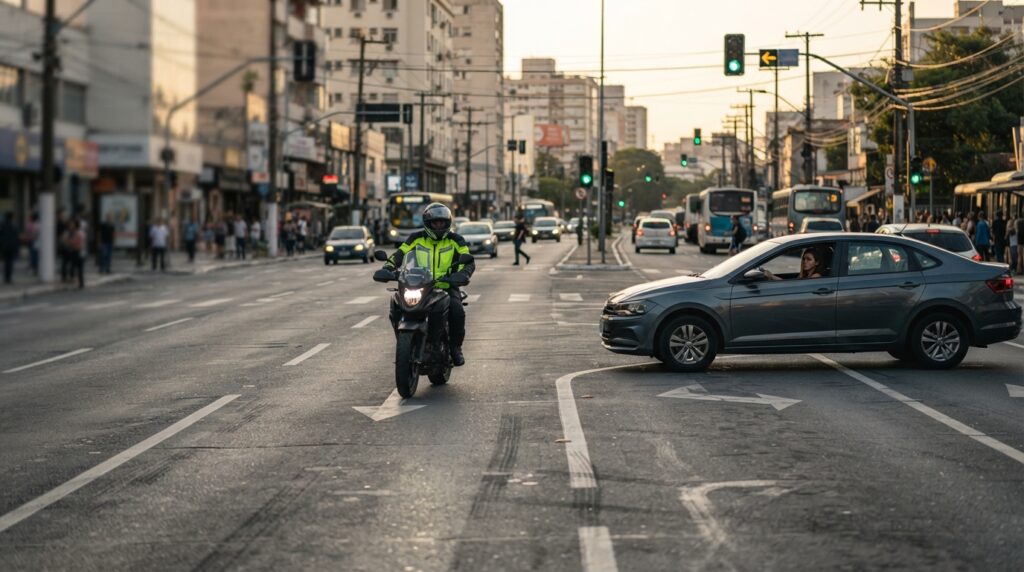
The easiest way to understand lane filtering vs lane splitting is to look at the traffic around the motorcycle. Filtering usually happens when surrounding vehicles are stopped or moving very slowly. Splitting can involve riding between rows of vehicles while traffic is moving.
That difference may sound small, yet it changes the risk picture. In stopped traffic, a rider has more time to watch mirrors, wheels, gaps, and driver movement. In moving traffic, closing speeds increase and available reaction time becomes shorter. A sudden lane change can quickly reduce the space around the motorcycle.
State laws also use their own definitions. Therefore, riders should never assume that a rule learned in one state applies everywhere else.
What Lane Filtering Usually Means
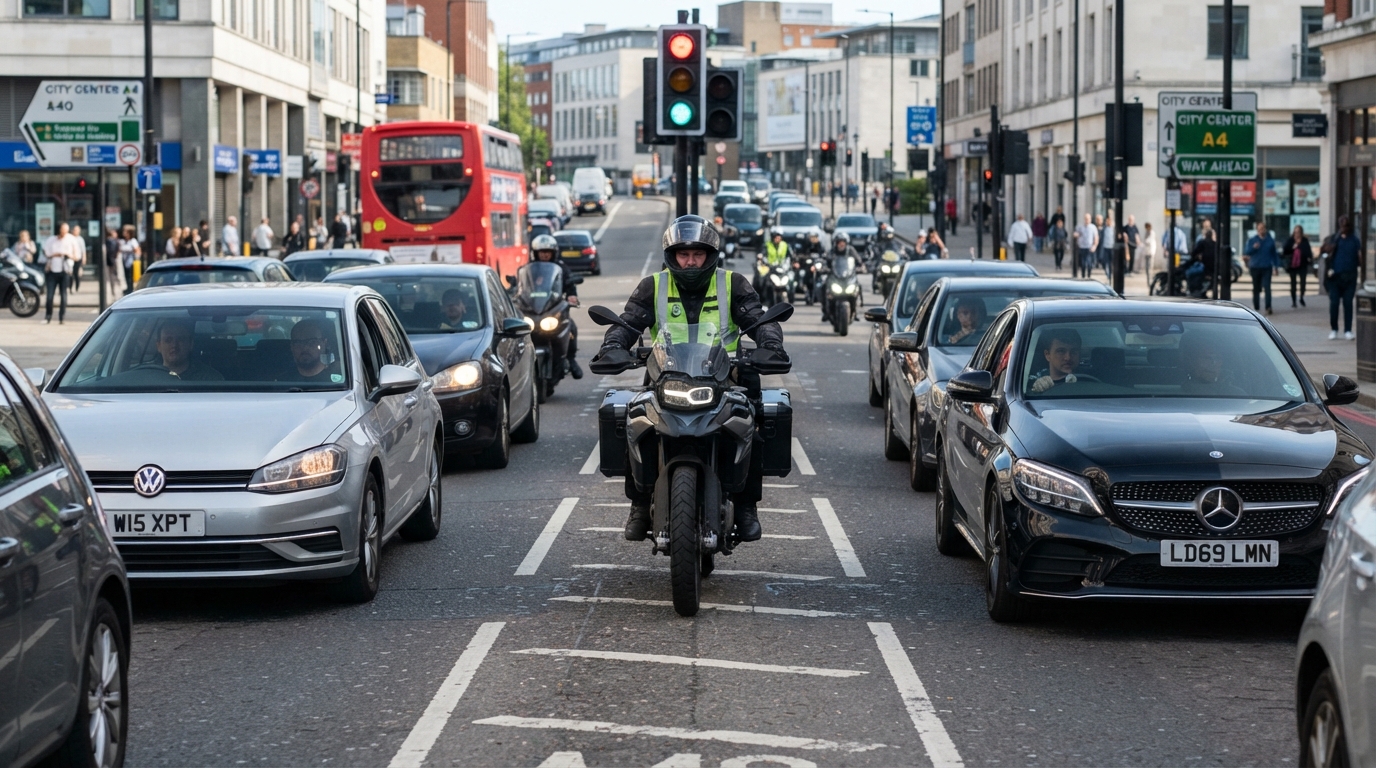
Lane filtering typically allows a rider to move forward between vehicles under narrow conditions. Those conditions can include a maximum motorcycle speed, a requirement that surrounding traffic be stopped, and limits on the type of road where filtering is allowed.
For example, Colorado allows lane filtering when the vehicles being passed are stopped and traveling in the same direction. The motorcycle must stay at 15 mph or less, the lane must be wide enough to pass safely, and the rider must stop filtering once traffic starts moving again. Colorado still treats lane splitting through moving traffic differently.
Filtering is usually a low-speed traffic maneuver
Low speed is one of the most important features of many filtering laws. A lower speed gives a rider more time to respond when a driver opens a door, moves toward another lane, turns a steering wheel, or leaves a gap for another vehicle.
Still, legal does not always mean safe. Tight gaps, mirrors, road paint, drainage covers, debris, and uneven pavement can all reduce the available margin.
If the space does not look safe, stay in the lane. Filtering is an option where permitted, not a requirement.
Filtering rules can include road and speed restrictions
Arizona is another example of a state with specific filtering conditions. Its statute allows a two-wheeled motorcycle to pass a stopped vehicle in the same direction and move between lanes when the maneuver can be made safely. The road must have at least two adjacent lanes going the same direction, the posted speed limit must not exceed 45 mph, and the motorcycle must stay at 15 mph or less.
Utah also distinguishes filtering from splitting. Current Utah law defines filtering around stopped traffic and allows it under specific conditions, including certain multi-lane roads or off-ramps, a posted speed limit of 45 mph or less on the roadway, and a motorcycle speed of 15 mph or less. Utah law separately defines lane splitting as riding between marked lanes while traffic is moving.
These examples show why riders should check the exact statute instead of relying on social media or memory.
What Lane Splitting Usually Means
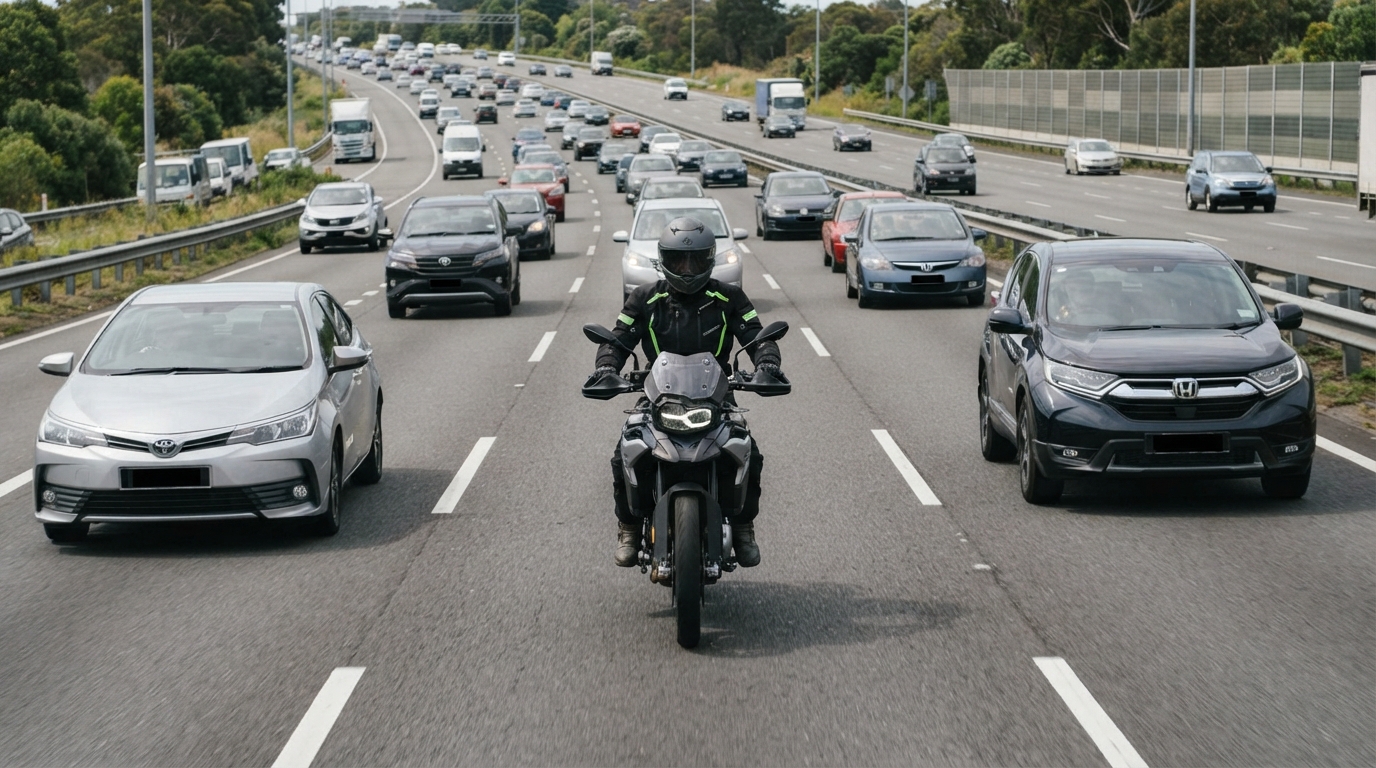
Lane splitting commonly refers to a rider traveling between rows or lanes of vehicles while surrounding traffic is moving. California is the best-known U.S. example. California Vehicle Code section 21658.1 defines lane splitting as riding a two-wheeled motorcycle between rows of stopped or moving vehicles in the same lane, including on divided and undivided roads.
The California Highway Patrol also warns that risk rises as overall speed and the speed difference between the motorcycle and nearby traffic increase. CHP guidance tells riders to consider lane width, vehicle size, roadway conditions, weather, lighting, blind spots, and surrounding traffic.
Speed difference matters as much as motorcycle speed
Imagine traffic moving at 20 mph while a motorcycle moves between lanes at 25 mph. The speed difference is relatively small. Now imagine traffic moving at 20 mph while the motorcycle travels at 50 mph. Even though both examples involve moving traffic, the second situation gives the rider and drivers far less time to react.
That is why riders should think about relative speed, not just the number on the motorcycle’s speedometer. A vehicle may move suddenly toward an open space. Another driver may change lanes after seeing a gap but before noticing the motorcycle.
Keep scanning several vehicles ahead. Look for front wheels turning, brake lights switching off, drivers checking mirrors, and spaces that invite a lane change.
How Motorcycle Lane Rules Differ Across States in 2026
Motorcycle lane rules are still a state-by-state issue. Some states authorize a narrow form of filtering. California expressly defines lane splitting. Other states prohibit riding between lanes except under specific exceptions. Because the details continue to evolve, riders should verify current law before a trip.
The National Conference of State Legislatures tracks traffic-safety legislation and is a useful starting point for understanding recent state activity. You can also review your state legislature, department of transportation, highway patrol, or motor vehicle agency for the controlling rule. See this authoritative traffic safety legislation resource before relying on a general summary.
Minnesota is a useful example of why checking the date matters. A law effective July 1, 2025 allows certain motorcycle passing within the same traffic lane when the motorcycle is traveling no more than 25 mph and no more than 15 mph faster than surrounding traffic. The statute also excludes locations such as roundabouts, school zones, certain single-lane work zones, and queued freeway or expressway on-ramps.
Check the Rule Before You Filter or Split
Before riding in another state, search for the current motorcycle statute and read the conditions closely. Focus on whether surrounding traffic must be stopped, the motorcycle’s maximum allowed speed, the maximum posted road speed, lane requirements, excluded road types, and any rules about shoulders or oncoming lanes.
Legal terminology can also differ. Current official guidance matters more than the label.
Use a safety-first routine even where the maneuver is legal
Start by creating space. Avoid filtering beside large trucks, buses, trailers, or vehicles with wide mirrors when the gap is tight. Stay out of blind spots whenever possible. Keep both hands ready for control and braking, and avoid sudden acceleration between vehicles.
Next, watch for clues that traffic is about to move. A driver’s front wheel can begin turning before the vehicle changes direction. A growing gap in one lane often attracts another driver. Pedestrians, cyclists, doors, road debris, and lane markings can also appear in the narrow area a rider plans to use.
Finally, be willing to stop filtering. If traffic begins moving, the gap narrows, visibility drops, or the road surface becomes uncertain, merge back into a normal lane when it is safe and legal to do so. Patience is often the better choice.
Protective gear also matters because filtering and splitting place the motorcycle close to other vehicles. A full-face helmet, gloves, abrasion-resistant clothing, boots, and visible riding gear can reduce exposure if something goes wrong. Visit our motorcycle gear guides for more information on protective equipment.
Riders should also practice low-speed control, straight-line braking, clutch and throttle coordination, and smooth lane changes. These skills make it easier to manage tight traffic without abrupt inputs. Our motorcycle training section covers the core techniques that support safer street riding.
Most importantly, lane filtering vs lane splitting should never be treated as a contest with surrounding traffic. The goal is not to pass as many vehicles as possible. The goal is to move only when the law permits it and when the available space, speed, visibility, and road conditions provide a reasonable margin.
Because motorcycle laws can change, revisit official sources periodically. Follow our motorcycle news and laws section for updates, and confirm any rule with the current state statute or transportation agency before riding. Knowing the difference between filtering and splitting is useful, but knowing the exact rule where you are riding is what keeps that knowledge practical.