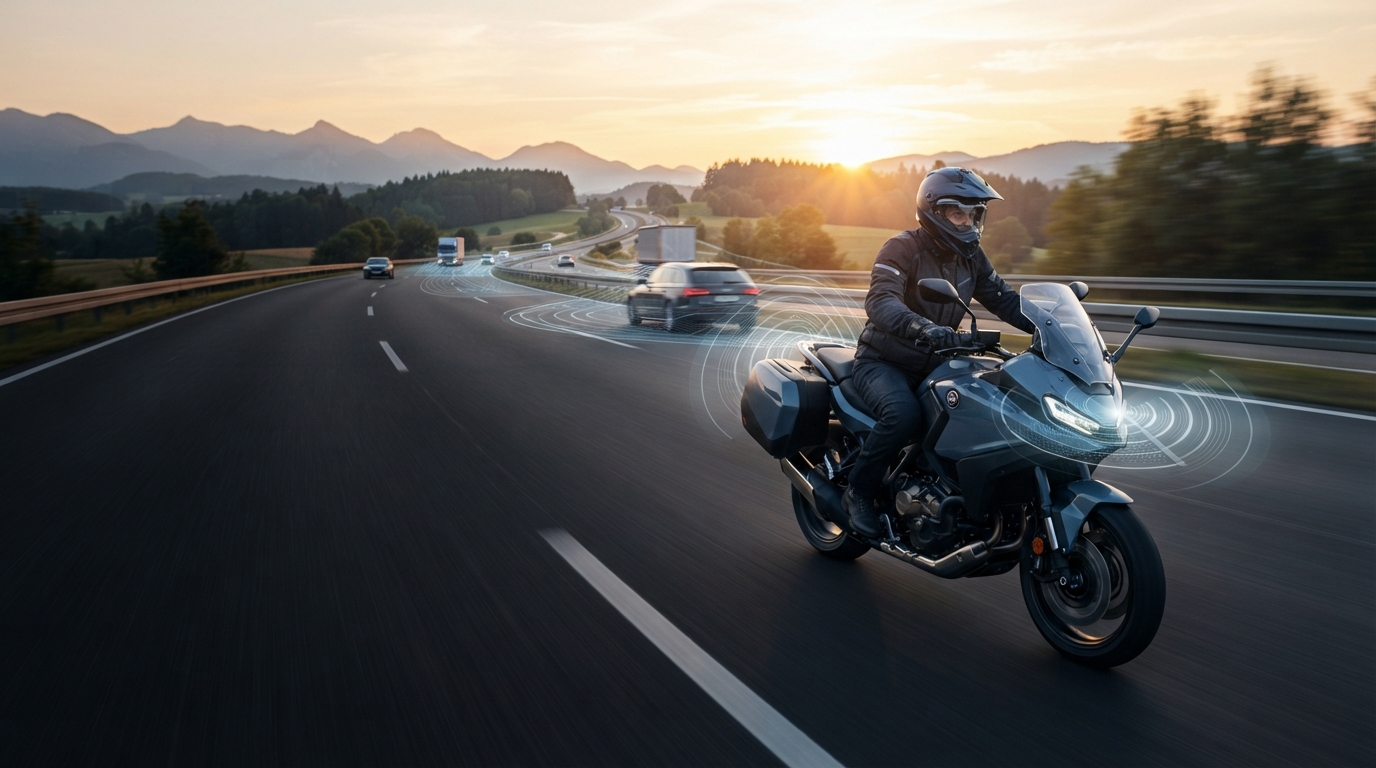
Advanced rider assistance systems are changing what modern motorcycles can do in traffic. Features that were once associated mainly with cars are now appearing on premium touring, adventure, and performance motorcycles. Radar sensors can watch the road ahead and behind. Adaptive cruise control can adjust speed to maintain a selected distance. Blind-spot detection can alert a rider to traffic that may be difficult to see in the mirrors.
These technologies can reduce workload and improve awareness, especially on long rides or busy highways. However, they do not make a motorcycle autonomous. The rider still controls the bike, chooses the line, scans for hazards, and decides when to brake, accelerate, or change lanes.
In 2026, systems from manufacturers such as Kawasaki, BMW, and Ducati show how quickly this technology is becoming part of high-end motorcycles. This guide explains how the main features work, what riders should expect, and why training still matters. For related advice, explore our motorcycle safety tips and motorcycle training resources.
How Advanced Rider Assistance Systems Work on Motorcycles
Advanced rider assistance systems, often shortened to ARAS, use sensors and electronic controls to monitor the motorcycle’s surroundings. Radar is especially useful because it can measure the distance and relative speed of vehicles ahead or behind. The motorcycle’s control systems then use that information to provide warnings or, in some cases, adjust speed and braking.
On a motorcycle, this technology has to work differently from a car. A bike leans, changes direction quickly, and gives the rider direct control through the throttle, brakes, handlebars, and body position. Therefore, motorcycle assistance features are designed to support the rider rather than take over the whole riding task.
Radar Gives the Motorcycle a Wider View of Traffic
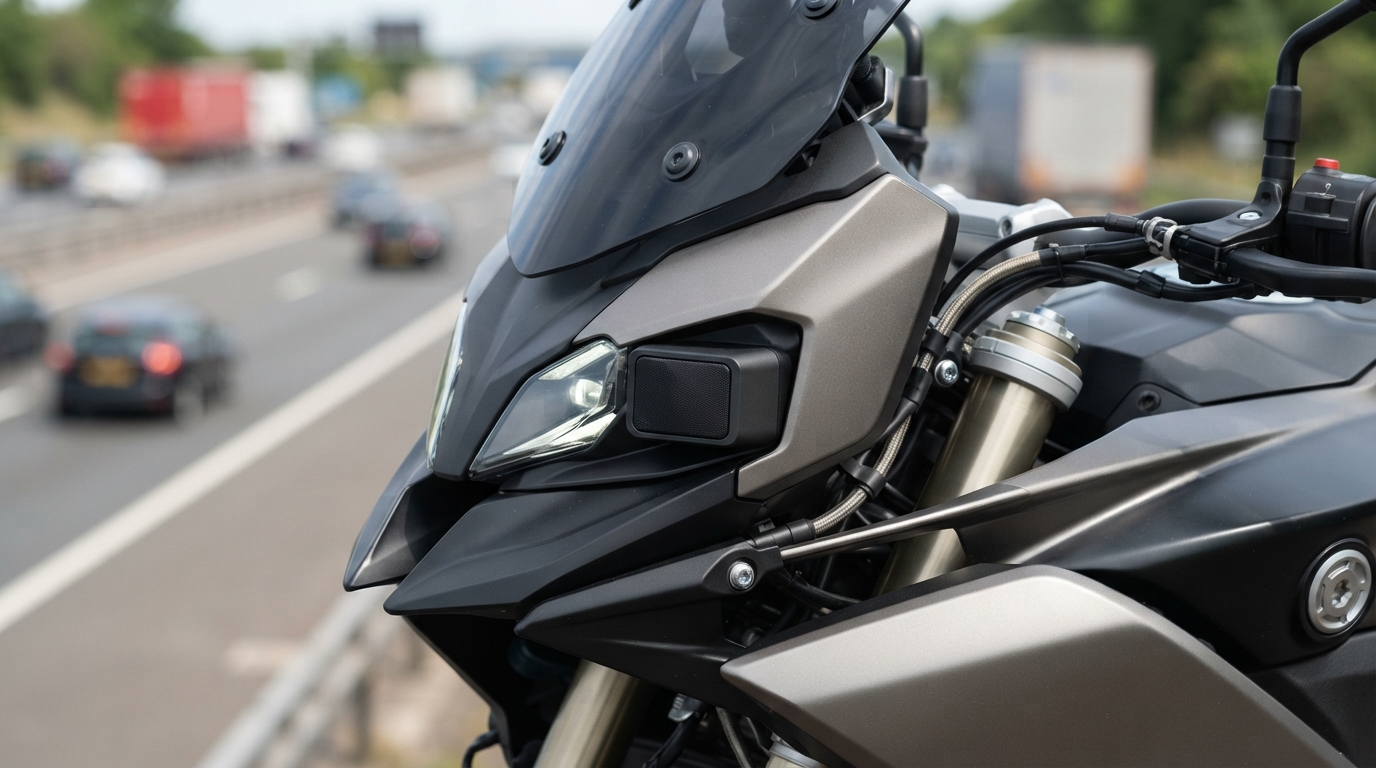
Front radar generally looks ahead to track vehicles in the motorcycle’s path. Rear radar can monitor areas beside and behind the bike. Together, these sensors can support functions such as adaptive cruise control, forward collision warning, blind-spot detection, rear-distance warnings, and other assistance features.
Bosch describes radar-based motorcycle assistance as a system that combines radar sensors with braking, engine management, and a human-machine interface. According to Bosch accident research, radar-based assistance could potentially prevent a meaningful share of motorcycle crashes by helping riders recognize or respond to critical situations sooner.
Adaptive cruise control can reduce highway workload
Traditional cruise control holds a chosen speed until the rider cancels it. Adaptive cruise control adds information from a front radar sensor. If the motorcycle approaches a slower vehicle, the system can reduce speed while maintaining a selected following distance. When the lane clears, it can return toward the chosen cruising speed.
This can be useful during long highway rides, where repeated throttle adjustments can become tiring. Still, riders must remain alert because radar does not understand every road hazard or react perfectly in every situation.
A sharp curve, a sudden lane intrusion, debris, or roadwork can still require immediate rider judgment. Adaptive cruise control is assistance, not permission to stop scanning the road.
Blind-spot detection adds another layer of awareness
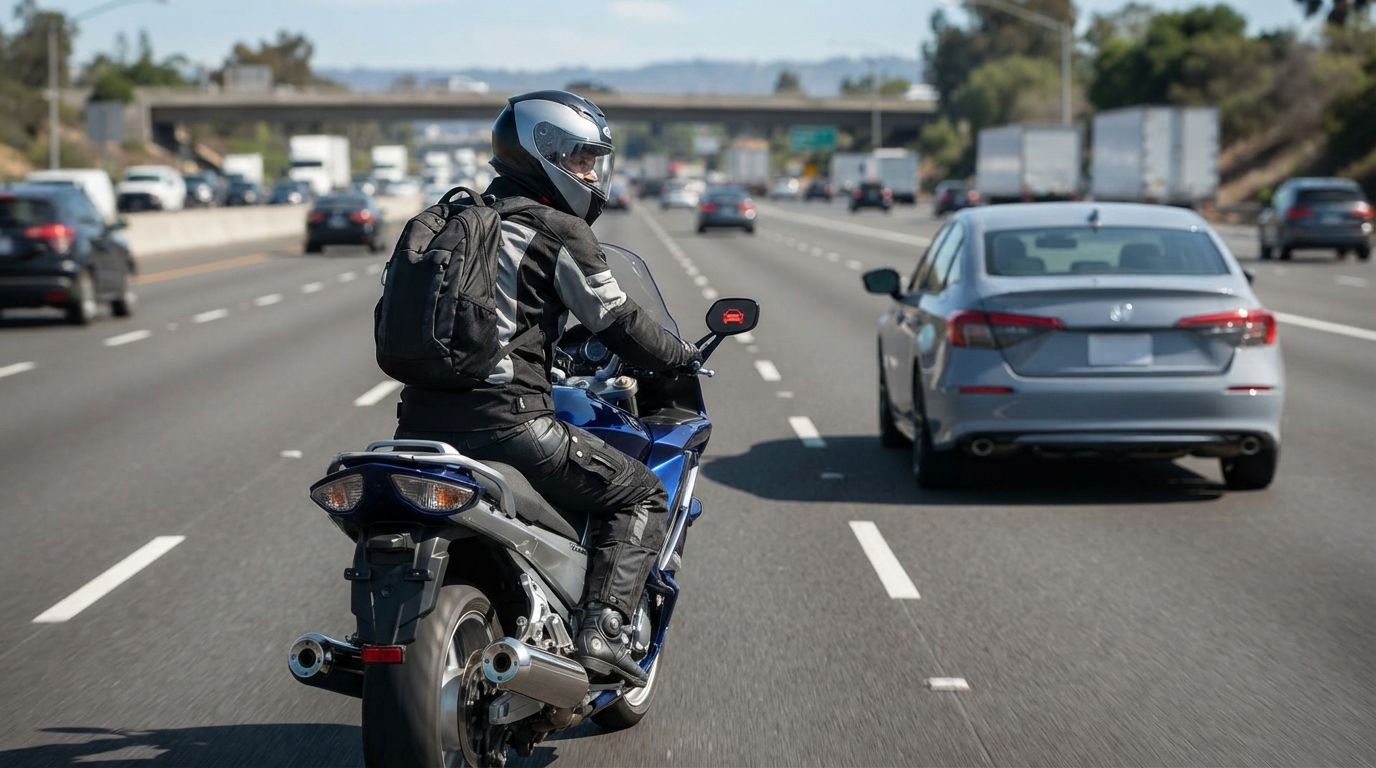
Motorcycle mirrors cannot show every area beside and behind the bike. A vehicle can sit in a blind spot, especially during multilane highway riding. Rear radar can monitor those areas and provide a visual warning when another vehicle is detected.
Depending on the motorcycle, the warning may appear in a mirror, instrument display, or another indicator. This can be helpful before a lane change, but it should never replace a shoulder check and mirror check. Sensors can add information; they do not remove the need for basic observation.
Riders should also understand what the warning system can and cannot detect. Weather, sensor position, unusual vehicle movement, or blocked sensors may affect performance. Keep radar areas clean and follow the motorcycle manufacturer’s maintenance instructions.
Forward Collision Warning Can Prompt a Faster Response
Forward collision warning uses information about the vehicle ahead to identify a developing risk. If the closing distance becomes critical and the rider has not responded, the system can provide a warning. The goal is to attract the rider’s attention before the situation becomes harder to manage.
Some newer assistance packages can go beyond warning. Bosch also describes emergency brake assistance that can increase brake pressure when the system detects a collision risk and the rider is not braking hard enough. The exact feature set varies by motorcycle, so riders should read the owner’s manual instead of assuming every radar-equipped bike works the same way.
Warnings are most useful when riders understand them before a real emergency
A warning is only helpful if the rider knows what it means. Before riding a motorcycle with advanced electronics, learn the dashboard icons, warning colors, sounds, and settings. If possible, review the system while parked and practice with the controls before using them in heavy traffic.
Also check whether the motorcycle lets you adjust following distance or warning sensitivity. Choose settings that support your riding without creating unnecessary distraction.
What Riders Should Know About ARAS in 2026
Advanced rider assistance systems are no longer just prototype technology. Current production motorcycles show that radar-based features have moved into real-world use. Kawasaki’s 2026 Ninja H2 SX SE lists adaptive cruise control, forward collision warning, and blind-spot detection as part of its Advanced Rider Assistance Systems package. BMW lists a radar-sensor Riding Assistant as optional equipment on the R 1300 GS Adventure. Ducati’s 2026 Multistrada V4 Rally also offers a front-and-rear radar system with adaptive cruise control, blind-spot detection, and forward collision warning.
These examples do not mean every new motorcycle will include radar. Cost, packaging, and intended use affect which technologies make sense, while touring machines may benefit most from features that reduce highway workload.
Use the Technology as Backup, Not as a Substitute for Skill
The biggest mistake a rider can make is becoming less attentive because the motorcycle has more electronics. ARAS works best when it supports strong riding habits. Maintain a safe following distance, keep an escape route, watch intersections, scan several vehicles ahead, and avoid staying beside another vehicle longer than necessary.
Training remains important because electronic aids cannot decide everything for you. Riders still need smooth braking, throttle control, cornering judgment, low-speed balance, and hazard recognition. Our motorcycle training section covers skills that work alongside modern rider aids rather than depending on them.
Know which systems your motorcycle actually has
Marketing terms can sound similar while the functions are different. One bike may have basic cruise control, while another has radar-based adaptive cruise. One system may only warn about a possible collision, while another may provide braking support. Blind-spot detection may use different alert methods depending on the model.
Before buying or riding a motorcycle, check the official specification and owner’s manual. Find out whether it uses front radar, rear radar, or both, how alerts appear, and whether braking assistance is included.
For a technical overview of how radar-based systems work, see this advanced rider assistance systems resource from Bosch. You can also follow our motorcycle news and safety updates as new systems reach production motorcycles.
Maintenance matters too. Radar sensors need a clear view of the road. Damage, dirt, accessories, or incorrect mounting can interfere with sensing. If the dashboard reports a fault, do not assume the feature is still operating normally. Follow the manufacturer’s instructions and have the system inspected when necessary.
Protective equipment remains essential as well. Radar cannot prevent every crash, and no rider aid replaces a helmet, gloves, boots, abrasion-resistant clothing, and suitable eye protection. Visit our motorcycle gear guides for help understanding protective equipment.
Advanced rider assistance systems are best viewed as another layer in a complete safety strategy. Good tires provide grip. ABS can help control wheel lock during hard braking. Stability systems can assist during demanding conditions. Radar can add information about nearby traffic. The rider still connects all of those pieces through judgment and skill.
As motorcycle electronics continue to develop in 2026, riders will likely see more features that monitor distance, traffic, and potential hazards. The useful question is not whether technology can replace the rider. It cannot. The better question is whether the technology can give an attentive rider more information, more consistency, or more time to react.
For many riders, that is where ARAS has real value. Adaptive cruise control can make long highway miles less tiring. Blind-spot alerts can add another check before a lane change. Forward collision warnings can call attention to a rapidly developing situation. Used correctly, these systems can support safer decisions while leaving the rider responsible for the ride.